Google’s UGC Spam Guide Targets AI Share Links
Much of what’s on the Internet is user-generated. A lot of it is junk. Some of it is just careless...
Continue Reading
Citation-generating assets on third-party domains? Google just loaded the gun and handed it to them – to point it at your foot.

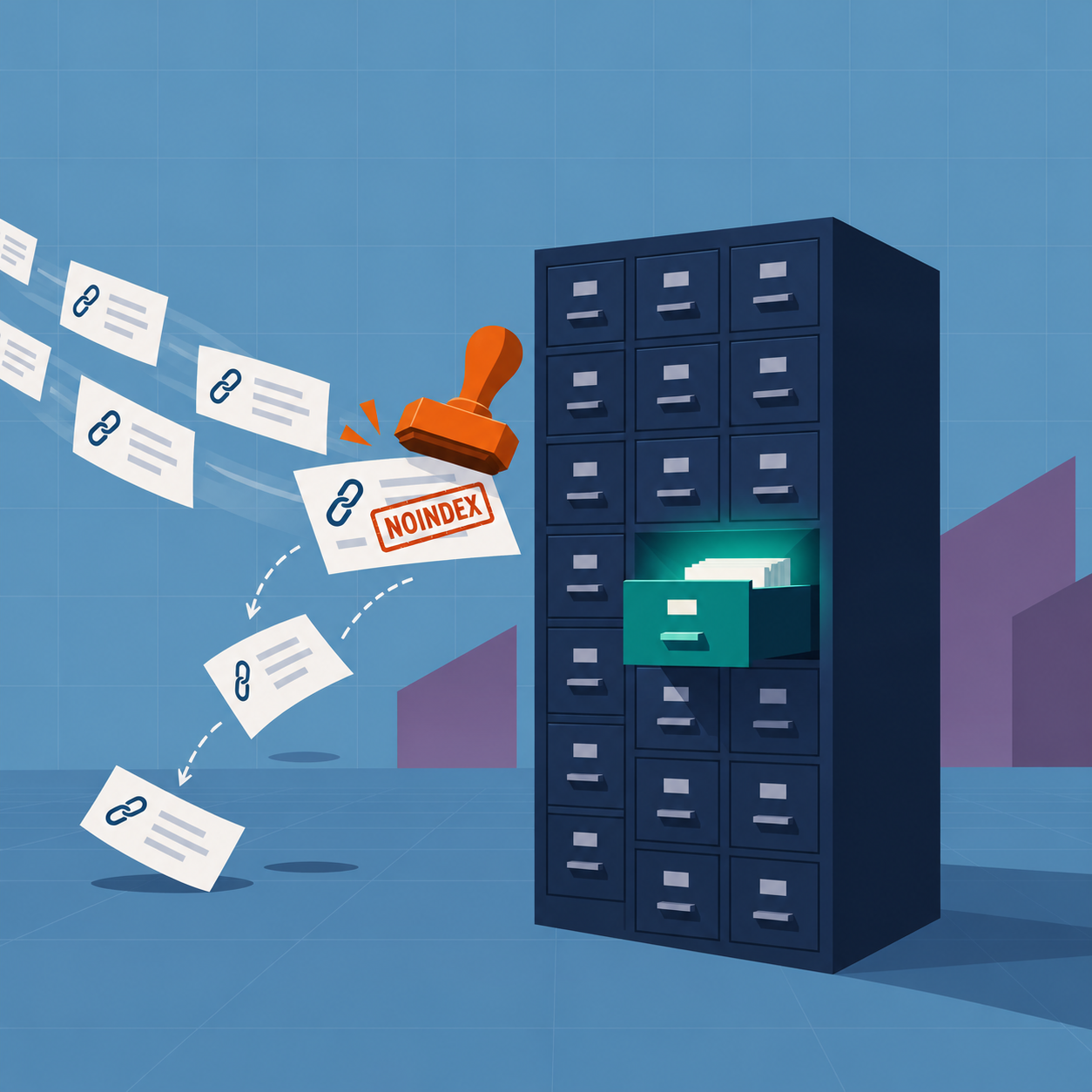
Google’s updated UGC spam guide now names tools that publish shared pages, generated content, and web apps as open to abuse.
This is not a new policy – Google announced no enforcement.
Pages built for sharing should be noindexed by default.
The site reputation policy does not cover UGC platforms.
Visibility hosted on third-party domains is a liability.
Executive Summary: On October 26, 2026, Google expanded its user-generated spam guide to cover tools that publish shared pages, generated content, and web apps. The updated documentation recommends owners keep such pages out of the index by default. While this is not a new policy and, as such, not subject to enforcement, it clearly signals where Google expects a new wave of spam to come from. For brands, the most important takeaway is that any visibility built on third-party domains is at risk.
Much of what’s on the Internet is user-generated. A lot of it is junk. Some of it is just careless filler – obvious, harmless, easy to ignore. Some, however, is anything but: built deliberately to game rankings and, increasingly, AI answers.
For brands investing in legitimate AI search optimization, that second kind is competition they never chose and, more often than not, they don’t even know exists. Well, Google just lifted the rock it was hiding under.
On October 26, 2026, Google rewrote part of its guide on preventing user-generated spam, targeting AI chat transcripts, artifacts, and vibe-coded apps that anyone can publish on a trusted domain in seconds.
Critically, this is not a new spam policy, and Google has announced no enforcement. However, it does tell platforms where the Search-defining tech giant expects a new wave of spam to come from.
Google’s updated guide and documentation changelog show three changes: wider platform scope, a noindex default, and platform monitoring:
Google’s UGC spam guide · October 26, 2026
Three changes, before and after
What the “Prevent user-generated spam” page said before the update, and what it says now.
| Change | Before | After October 26 |
|---|---|---|
| Wider platform scopeIntro paragraph | Only hosting platformsnamed as open to abuse; spammers create many sites. |
Adds tools that let users publish shared pages, generated content, or web apps; spammers create many pages or sites. |
| A noindex defaultNew section | Noindex suggested only for posts from new users without reputation. | NewOnly index content meant for Search: pages built for sharing, collaboration, or utility get noindex (meta tag or X-Robots-Tag) or a robots.txt block by default. |
| Platform monitoringTop of monitoring list | List opened with on-page spam signals; Search Console not mentioned. | NewVerify sites and subdomains in Search Console for manual-action alerts; watch Page Indexing and Performance for spikes; alert when a few users generate a large share of indexable URLs. |
What it isn’t: a new spam policy. Google announced no enforcement, and the rest of the page is unchanged.
Sources: Google Search Central, Prevent user-generated spam and documentation changelog (October 26, 2026); prior wording per PPC Land’s comparison. Analysis: ZeroClick Labs.
Google’s stated reason for the new update is “To help platforms keep user-created pages that aren’t meant for Search out of the index and detect spam earlier.” The underlying reason is actually threefold: share links keep getting indexed, the policy built for parasite SEO doesn’t cover the platforms hosting them, and that junk can now reach AI answers.
Pages meant only for people with links kept ending up in Google’s public results. This happened multiple times, the most notable being:
Google’s site reputation policy, which targets parasite SEO, lists sites designed for UGC as examples that don’t violate it. Effectively, a spammer publishing on a sharing platform gets said platform’s domain strength, while the host remains outside the one policy built to address exactly this pattern. The update could be read as Google choosing not to stretch the policy, instead asking platforms to keep excluded pages out of the index themselves.
Because AIOs and AI Mode synthesize their answers from pages in Google’s index, junk indexed on trusted domains can (and does) make it into citations – so it’s no longer just a blue-links problem. And since Google extended its spam policies to generative AI responses in May 2026, naming manipulating AI answers as spam, the stakes stack.
How the update impacts you depends entirely on which side of the share link you’re on:
The overarching theme here is obvious, and it should get you thinking: Visibility hosted on someone else’s domain can disappear in an instant, without warning – through no fault of your own.
Google’s October 2026 UGC spam guide update
Who it affects, and how
It depends on which side of the share link you’re on. Hover, tap, or tab to a card to see what changes.
Platform owners
You run a platform with shareable outputs
Reports, calculations, dashboards, generated pages
Reveal ›What changes
The guide is now addressed to you, explicitly.
The catch
It carries no penalty on its own, but it defines what reasonable prevention looks like.
GEO on third-party domains
Your citations rely on someone else’s domain
Branded artifacts, shared chats, seeded app-builder microsites
Reveal ›What changes
That inventory is set to shrink if platforms switch to noindex.
The catch
A page must be indexed and snippet-eligible to appear in AI Overviews or AI Mode. Noindexed means uncitable.
Third-party builders
You build legitimate assets on someone else’s platform
Campaign microsites, prototypes, interactive tools
Reveal ›What changes
Those assets could drop out of Search.
The catch
A single platform-wide default change could pull them overnight, and you don’t control it.
Visibility hosted on someone else’s domain can disappear without warning, through no fault of your own.
Sources: Google Search Central, Prevent user-generated spam (October 26, 2026) and AI features and your website. Analysis: ZeroClick Labs.
If you run a platform, Google has effectively handed you a checklist: keep shared and generated pages out of the index by default, and watch GSC for anomalies; if you don’t run a platform, the answer is even simpler: keep any page that matters for your visibility on a domain you control.
Google’s October 2026 UGC spam guide update
How to keep your visibility after the change
Hover, tap, or tab to a step to reveal what to do.
Either way
Audit your footprint on sharing domains
Reveal ›Run site: searches on major share paths for your brand, covering what your team published and what others published about you, impersonation included.
If you run a platform
Noindex, don’t disallow
Reveal ›Google’s own noindex documentation warns that a robots.txt block hides the noindex rule, and a blocked URL can still be indexed when other pages link to it. Share links exist to be linked. Serve X-Robots-Tag: noindex and keep the path crawlable.
Build the monitoring Google described
Reveal ›Verify every user subdomain, and alert on indexed-page spikes and URL concentration before Google does.
If you don’t run a platform
Move anything you want cited to your own domain
Reveal ›If an asset matters for AI Overviews visibility, host it where indexing decisions are yours.
Source: Google Search Central, “Prevent user-generated spam on your site and platform” (updated October 26, 2026) and noindex documentation. Analysis: ZeroClick Labs.
Tina Clarke is the AI SEO Manager at ZeroClick Labs, specializing in AI search optimization and Generative Engine Optimization (GEO). With a strong foundation in content strategy, technical SEO, and operations, she leverages her expertise to help brands shift from traditional rankings to discoverability and excel in AI-driven ecosystems.
It shouldn’t depend on someone else’s settings
Especially now that you know they can switch it off at a whim.
ZeroClick Labs builds AI visibility on ground you control: your domain, your content, your entity signals – and tracks it across AI Overviews, AI Mode, ChatGPT, and Perplexity.
Platforms will keep changing their defaults.
“Our agency had no idea how to approach AI visibility. ZeroClick only does this one thing so they actually know what works. Worth every penny just to not waste time figuring it out ourselves.” – Jay