AI Marketing SaaS Statistics
ZeroClick Labs compiled a list of SaaS marketing statistics to help brands and marketers understand how their buyers research, what...
Continue Reading
A public check for Google's invisible AI watermark is now live.

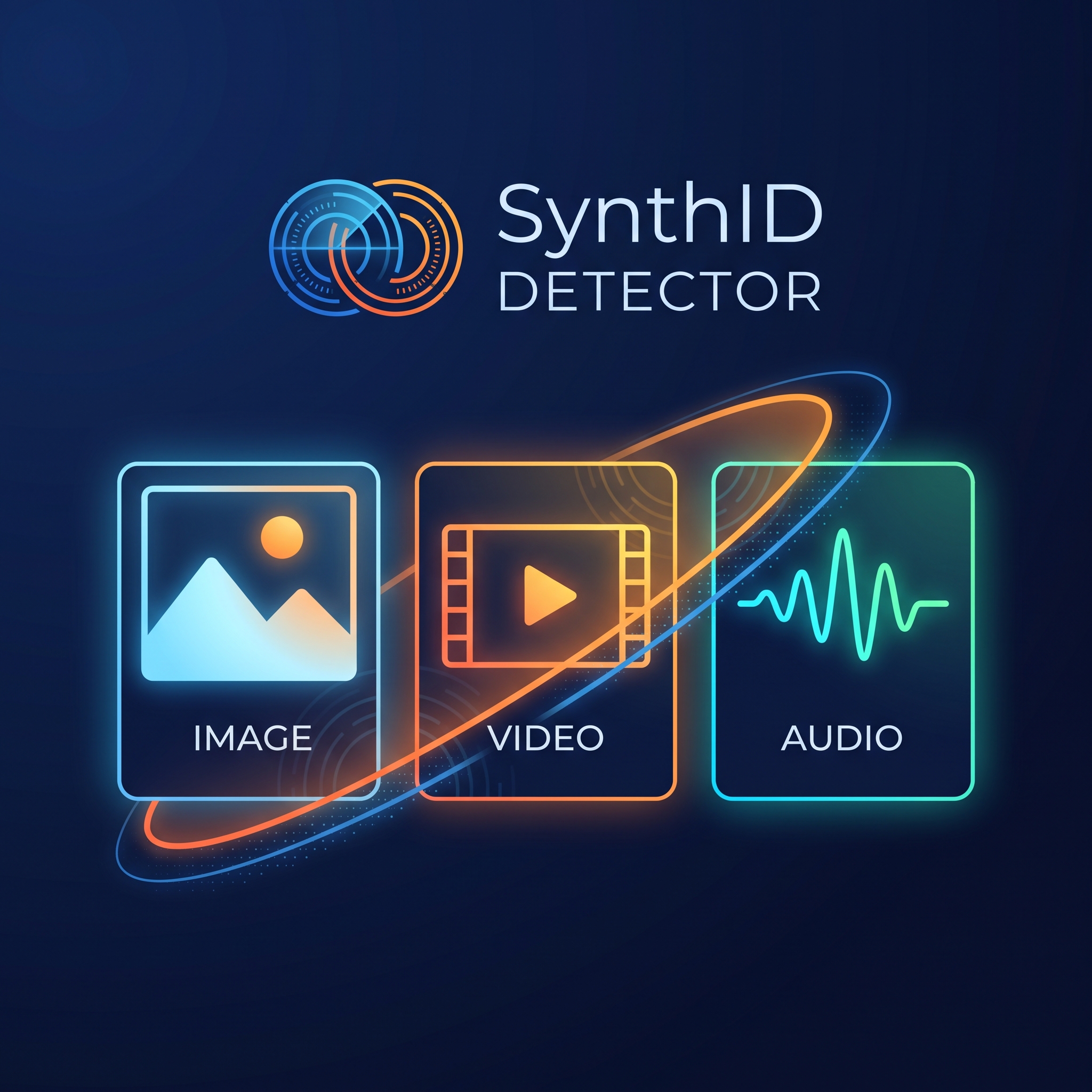
Google opened the SynthID Detector to the public on October 7, 2026, in English worldwide.
The tool scans images, video, and audio for invisible watermarks from Google, OpenAI, NVIDIA, and Kakao.
A clean scan does not prove a file is human-made, because many AI tools do not use SynthID.
A positive scan means Google AI made or edited the file, without saying how much.
No reporting links SynthID to AI search rankings or citations.
Executive Summary: Google’s SynthID Detector is a free public tool that checks media for Google’s invisible AI watermark. It helps brands vet creative assets, but it has clear limits and no known connection to AI search visibility.
On October 7, 2026, Google opened its SynthID Detector to everyone, so anyone can now check images, video, and audio for its hidden AI watermark. If you’re working on Gemini optimization, this won’t affect your visibility, but may still change how brands should vet the content they publish.
The SynthID Detector is a free website, synthid.com, that checks whether a file carries SynthID, Google’s imperceptible AI watermark. Google has embedded the signal in its generated media since 2023, and their announcement puts the total above 180 billion images and videos plus 240,000 years of audio. Until now, an early detector was limited to journalists, researchers, and media professionals who joined a waitlist.
The detector reads watermarks from Google, OpenAI, NVIDIA, and Kakao, and Google says Apple will follow, though it has given no date. TechCrunch reports that Google’s Veo, Lyria, and Nano Banana models mark their output and that the site accepts formats including PNG, WEBP, MP4, MOV, MP3, and WAV. Separate checks inside Search, the Gemini app, and Chrome handle more than one million requests a day.
A scan can confirm that a supported AI tool made or edited a file, and it cannot say much more than that. Search Engine Journal notes that the result does not distinguish a retouched photo from a fully generated one. Google also states that the site is not a general AI detector, so a missing watermark is not evidence of human authorship, and its FAQ advises combining several signals before drawing a conclusion.
Cropping, compression, and re-exporting can weaken or remove an invisible watermark. In a Reuters test of 40 generated images, Meta’s separate detector verified every original but missed 55% once the images were cropped to roughly a third to a half of their size. That result applies to Meta’s tool rather than SynthID, but Google and OpenAI acknowledge that their detectors are also not foolproof against alterations, which is why Google asks for the highest-quality copy of a file. Microsoft and Meta run their own standards as well, so no single scan covers every tool.
Content teams should add a scan to their review process, update the wording that governs authorship, and keep a record of how each asset was produced.
The detector does not check written copy, so text needs its own review and records.
No published evidence suggests that it does. Google presents the detector as a way for people to judge what they can trust, and no coverage links watermark detection to rankings or citations. The tool checks files that users upload, and nothing released so far indicates that it influences how Gemini, AI Overviews, or any other AI search experience selects its sources.
Brands therefore have little reason to rebuild their content strategy around watermarks. Visibility in AI answers still appears to depend on clear entities, clean structure, and topical authority, themes that run through our look at DeepMind’s autoregressive ranking paper. That paper is theoretical and does not address SEO, so those implications are informed extrapolation rather than confirmed practice.
SynthID is better understood as a trust and brand-risk issue than as a search signal. If a campaign image is flagged as AI-made when the audience expected otherwise, the damage is reputational rather than algorithmic, and strong content fundamentals combined with clean asset records address both concerns.
Apple’s promised support, languages beyond English, and additional partners are the main developments to follow. Provenance and performance should also stay separate questions: a scan shows how an asset was made, whereas Gemini UTM parameters and GA4’s AI channel show where visits come from, and teams need both views.
Jordan Parkes, the CEO and founder of ZeroClick Labs, has been building and scaling digital marketing strategies since 2012, leveraging performance-driven SEO and data-based digital marketing solutions to guide the growth of hundreds of companies across the U.S. and Europe.
Verification tools label media. They don’t pick winners in AI answers.
Your content signals do that.
That’s where we come in.
ZeroClick Labs works on exactly that gap. We study how Gemini, ChatGPT, Perplexity, and Google’s AI features find and cite sources, then shape your pages and reporting so you can see what those citations turn into.
“Our agency had no idea how to approach AI visibility. ZeroClick only does this one thing so they actually know what works. Worth every penny just to not waste time figuring it out ourselves.” – Jay