Key Takeaways:
-
Yelp is licensing its reviews, ratings, and photos to OpenAI, injecting your local business data directly into ChatGPT’s answers.
-
The surface that describes your brand to buyers relocates from a Yelp profile you control to an AI response you can barely audit.
-
Reviews arrive in ChatGPT stripped of context, giving stale and outlier reviews disproportionate weight.
-
“Request a Quote” can potentially close a lead without it ever reaching your website.
-
Managing your profile accuracy across every review source AI engines pull from is the best play, due to the licensing deal being non-exclusive.
Executive Summary: On July 23, 2026, Yelp confirmed a licensing deal with OpenAI, making its local business data able to be surfaced in ChatGPT’s responses. Consequently, Yelp became a prime visibility lever for any business with physical location, and turned review-profile accuracy, cross-platform integrity, and deliberate monitoring into immediate priorities.
What happens when one of the world’s largest local business review platforms becomes a data source for the world’s most prominent answer engine?
Yelp begins influencing the local recommendations ChatGPT generates.
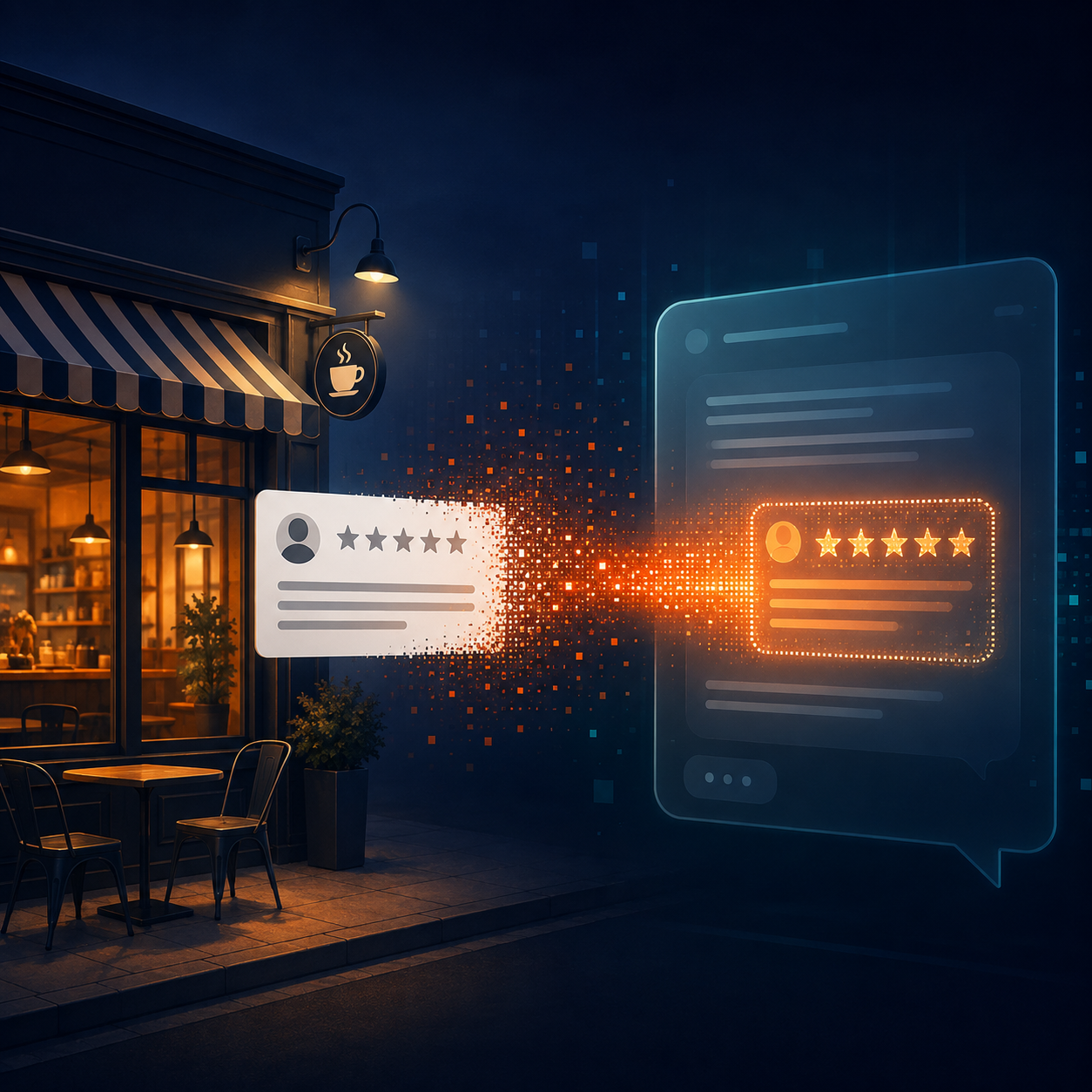
Through its data licensing agreement with OpenAI, Yelp’s reviews, ratings, photos, and business information can inform how ChatGPT responds to local queries.
That means Yelp may shape not only which businesses appear in an answer, but how their reputation, quality, and relevance are interpreted and presented.
Yelp is no longer simply a platform consumers visit. It is becoming part of the information infrastructure ChatGPT uses to recommend local businesses.
The implications go beyond the obvious conclusion that ChatGPT optimization is now a local visibility priority. They raise a more fundamental question: How do you influence the sources that influence the answer?
What did Yelp and OpenAI agree to?
On July 23, 2026, Yelp confirmed it is licensing its reviews, ratings, photos, and structured business information to OpenAI. In a nutshell, Yelp is feeding its data into ChatGPT for it to surface in response to local queries.
Direct attribution is also confirmed: Per Axios’s reporting, Yelp’s branding and links will surface whenever ChatGPT uses its content, with a caveat that OpenAI (not Yelp) will control how that content appears.
In addition, Yelp’s “Request a Quote” feature will soon be integrated into the ChatGPT flow, allowing users to contact local service providers for estimates directly – without having to leave the platform.
What does the Yelp-OpenAI agreement change for local brands?
If your brand is already on Yelp, the new licensing deal effectively gives you a massive new channel for exposure, seemingly for free. “Seemingly,” because it also transforms your Yelp profile from a directory listing into an integral part of your core visibility infrastructure – and that comes with real management and measurement complications.
Stay ahead of what’s changing in AI search
Subscribe for practical updates on AI discovery, answer engine visibility, and the shifts that matter most for brands trying to stay visible.
Your Yelp profile now shapes the AI answer
The reviews, categories, photos, and other details attached to your location(s) now shape how ChatGPT describes your brand at a moment buyer’s purchase intent is at its peak. This wouldn’t be much of a complication if it weren’t for two facts:
- Stale or outlier negative reviews get a second life: When a review arrives in a ChatGPT answer, it does so stripped of all the context that frames it on Yelp – including its age and volume of higher ratings around it. As such, a single dated complaint can carry more weight than it typically would on the profile itself.
- “Request a Quote” moves the conversion off your website – and your leverage: A lead can originate, compare, and book inside ChatGPT, without ever landing on a page you own. That means no site visits to measure, no retargeting pixel, no chance to shape the pitch. You get or lose the business on the spot, inside the surface you can’t control.
The blind spot widens
The second issue is that ChatGPT is still a surface you can’t cleanly audit, and the data deal further muddies the waters. First, citations and quote requests that take place inside ChatGPT, despite running on Yelp’s data, will not surface cleanly in your existing referral tracking system.
Second, since OpenAI controls presentation, citation format and prominence can change without notice, increasing the uncertainty of an already volatile ecosystem. Finally, inaccuracies can now propagate through AI answers, rather than resting in a listing you can quietly fix.
Quick reference
How to respond to the Yelp–OpenAI deal
Hover or tap a step to expand
1
Audit your Yelp profile as core infrastructure
Your Yelp details now feed ChatGPT directly, so treat their accuracy and completeness as a visibility priority — you’re curating the exact data OpenAI is licensing.
2
Keep every review profile in good shape
The deal isn’t exclusive. Keeping your information accurate across every source AI engines pull from makes your visibility resilient, whatever the chatbot or platform.
3
Monitor how — and how correctly — ChatGPT surfaces you
Check deliberately whether ChatGPT surfaces your local data at all, and whether it describes your brand correctly when it does.
4
Licensed data gets you into the answer, not everything about how you appear there. Treat it as part of a broader ChatGPT optimization strategy, not a replacement.
How to respond to the Yelp-OpenAI deal?
The strategic response is to treat licensed data sources as a channel and manage them deliberately.
- Audit your Yelp profile as core infrastructure: Since your Yelp details now feed ChatGPT directly, treat their accuracy and completeness as a visibility priority rather than directory hygiene. This is your highest-leverage move, because you’re essentially curating the exact data OpenAI is licensing.
- Keep EVERY review profile in good shape: The Yelp deal is not exclusive, meaning other LLM providers may soon follow in OpenAI’s footsteps – not necessarily signing with Yelp. Keeping your information accurate, complete, and current across surfaces AI engines pull from makes your visibility more resilient, regardless of the chatbot or source.
- Monitor how and how correctly ChatGPT surfaces you: Vigilance and fast response are non-negotiable. Approach this channel the same way you do the AI-visibility measurement in general: monitor it deliberately to confirm whether ChatGPT surfaces your local data at all and, if it does, whether the information is displayed correctly.
- Do not neglect parts of ChatGPT that Yelp doesn’t cover: Curating licensed data can get you into ChatGPT’s answers, but it doesn’t control everything about how you show up there. Treat Yelp-induced visibility as an integral part of a broader ChatGPT optimization strategy, not as a replacement for it.
Lily Evans is the Managing Director at ZeroClick Labs, bringing over 8 years of comprehensive experience in SEO, local SEO, and AI optimization to every project. She began her career in content writing, developing a strong sense for search intent and messaging clarity in the digital realm – skills that form an unshakable core of her leadership to this day.